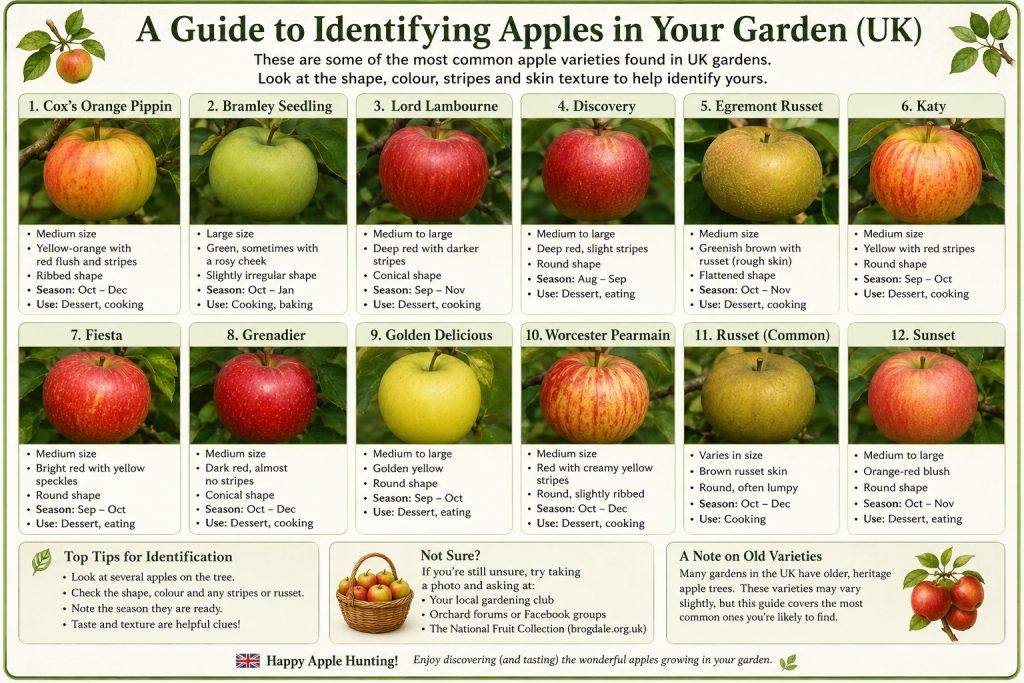
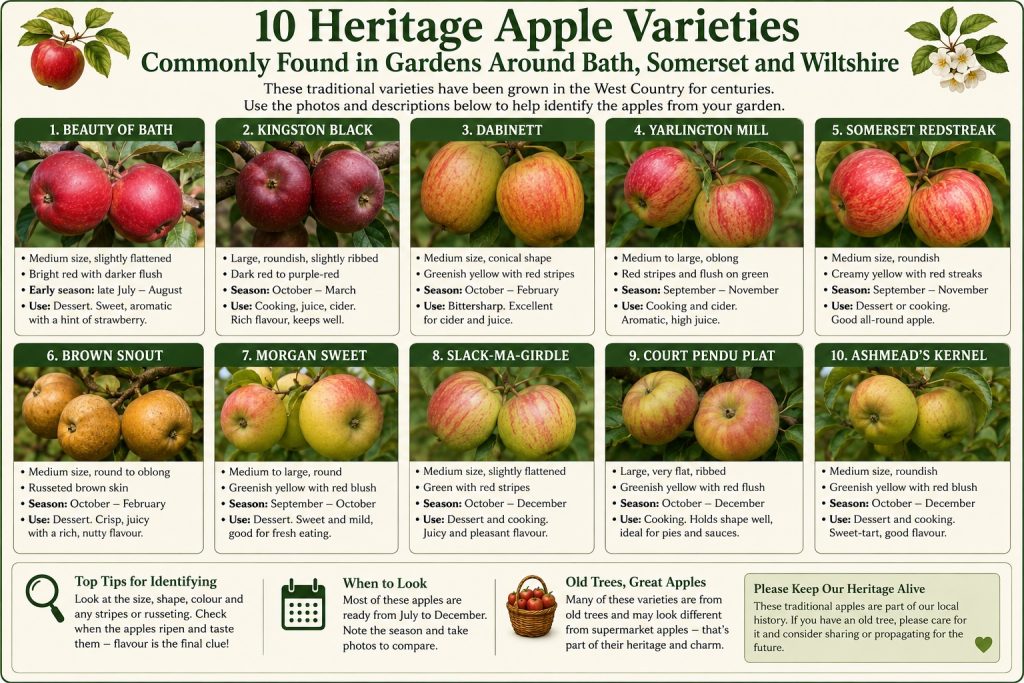
If you’ve discovered an old apple tree in your garden and are thinking about using our apple pressing service, if you’re curious, you may also be wondering what variety it could be. Every autumn, people across Bath, Somerset and Wiltshire bring apples to our apple press, hoping to get some delicious, pure apple juice. However, many of our customers are determined to learn more about the fruit growing in their own back garden.
The West Country has a rich history of apple cultivation. Long before supermarkets standardised fruit production, local orchards were growing hundreds of different varieties, each with its own appearance, flavour and purpose. Some were prized for eating fresh, while others were grown specifically for cider making, cooking or storage through the winter months.
While accurately identifying an apple variety can be challenging, understanding the characteristics of some of the region’s most common heritage apples can provide valuable clues.
1. Beauty of Bath
One of the most famous apples associated with the city of Bath, Beauty of Bath was first introduced in the nineteenth century and quickly became popular across southern England.
This early-season dessert apple is usually ready from late July through August. It typically has a bright red flush over a green-yellow background and is known for its sweet flavour with hints of strawberry.
Key Characteristics
- Bright red colouring
- Medium-sized fruit
- Early ripening season
- Sweet, aromatic flavour
- Excellent for eating fresh
2. Kingston Black
Although best known as a cider apple, Kingston Black is often found in older gardens and small orchards throughout Somerset and Wiltshire.
The fruit is dark red to almost purple in colour and produces cider with exceptional flavour and balance. Even a single Kingston Black tree can be a valuable find.
Key Characteristics
- Dark red skin
- Rich, complex flavour
- Late season variety
- Highly prized for cider production
3. Dabinett
Dabinett remains one of Somerset’s most important cider apples and is still commonly found in traditional orchards.
The apples are medium-sized with yellow-green skin often marked by red streaks. They produce sweet, full-bodied juice that blends well with sharper cider varieties.
Key Characteristics
- Yellow-green skin with red markings
- Reliable cropper
- Excellent cider apple
- Late harvesting season
4. Yarlington Mill
Originating in Somerset, Yarlington Mill is another classic cider variety that has become increasingly popular among orchard enthusiasts.
Its attractive striped appearance makes it relatively easy to spot compared with some other heritage apples.
Key Characteristics
- Red-striped skin
- Aromatic juice
- Good disease resistance
- Traditionally used for cider
5. Somerset Redstreak
As the name suggests, Somerset Redstreak has strong roots in the county and has been cultivated for centuries.
It produces apples with attractive red striping and remains one of the region’s most historically significant cider varieties.
Key Characteristics
- Distinctive red streaks
- Historic Somerset variety
- Excellent for blending into cider
- Good flavour balance
6. Brown Snout
Brown Snout is one of the easiest heritage cider apples to recognise due to its russeted brown skin.
The fruit can appear somewhat rough compared with modern supermarket apples, but this rustic appearance is part of its charm.
Key Characteristics
- Brown russeted skin
- Traditional cider variety
- Distinctive appearance
- Late ripening
7. Morgan Sweet
Originally discovered in Somerset, Morgan Sweet is a popular dual-purpose apple that can be used for both cider and fresh eating.
Its sweet flavour makes it particularly appealing to those new to heritage varieties.
Key Characteristics
- Sweet taste
- Attractive red blush
- Good for cider and eating
- Common in older orchards
8. Slack-ma-Girdle
Possibly one of the most memorable names in British pomology, Slack-ma-Girdle is a traditional West Country apple with a long history.
It is believed to have earned its unusual name from the effects of consuming too much of the cider made from it.
Key Characteristics
- Historic cider variety
- Distinctive local heritage
- Excellent juice quality
- Rare but still found in old orchards
9. Court Pendu Plat
Court Pendu Plat is one of the oldest cultivated apple varieties still grown in Britain today.
Its flattened shape helps distinguish it from many other apples and makes it a favourite among fruit enthusiasts.
Key Characteristics
- Distinctively flattened fruit
- Very old heritage variety
- Good keeper
- Excellent cooking apple
10. Ashmead’s Kernel
Although originating in neighbouring Gloucestershire, Ashmead’s Kernel is commonly found throughout Somerset and Wiltshire.
It is highly regarded for its intense flavour and is often considered one of Britain’s finest heritage dessert apples.
Key Characteristics
- Green-yellow skin
- Complex sweet-sharp flavour
- Excellent for eating fresh
- Popular among apple enthusiasts
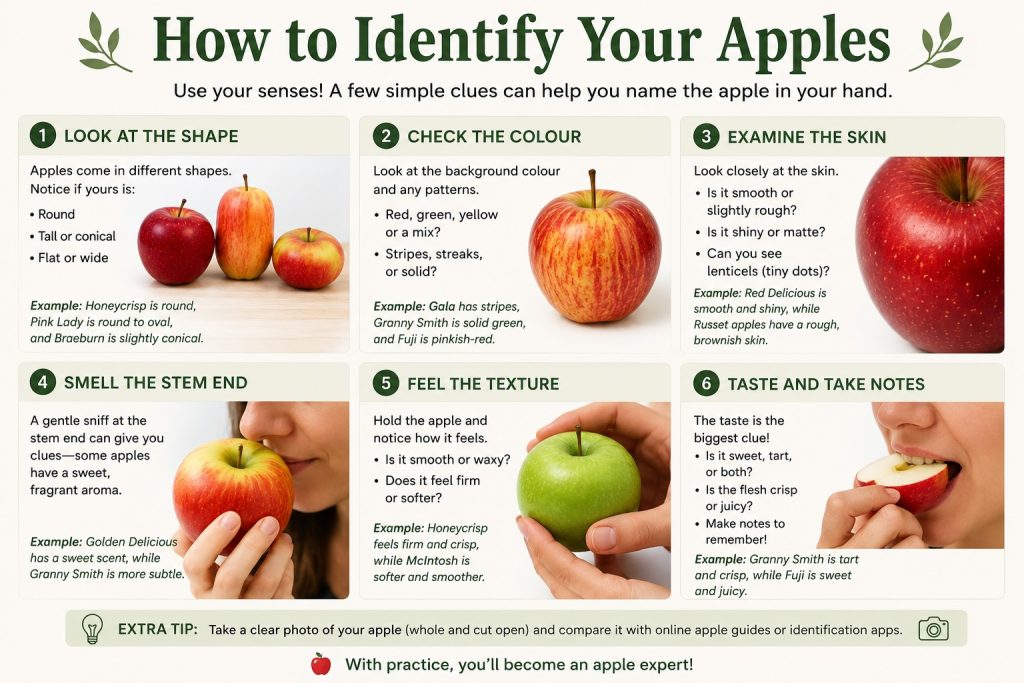
How to Identify Your Own Apple Tree
When trying to identify apples from your garden, consider the following:
Colour
Look at the background colour of the fruit as well as any stripes, flushes or russeting.
Shape
Some apples are perfectly round, while others are conical, flattened or ribbed.
Season
The time of year when the apples ripen can provide important clues. Beauty of Bath, for example, ripens much earlier than many traditional cider varieties.
Taste
Sweetness, acidity and texture are often key identifying features.
Tree Age
Many older gardens in Bath, Somerset and Wiltshire contain trees planted decades ago, meaning heritage varieties are often more common than people realise.
Still Not Sure?
Even experienced orchard owners can struggle to identify apples with complete certainty. Many varieties look remarkably similar, and weather conditions can affect colour, size and flavour from year to year.
If you’re interested in discovering more about your apples, consider taking clear photographs of the fruit, leaves and tree, or bring a selection along to a local apple day, community orchard event or apple pressing session.
You may be surprised to discover that your garden contains a piece of West Country fruit-growing history.
It’s also worth brushing up on the most common types of apple in the UK, in case you have one of these types of apples instead: